


How Does Steel Quality Affect Building Lifespan? | Reinforcing Steel
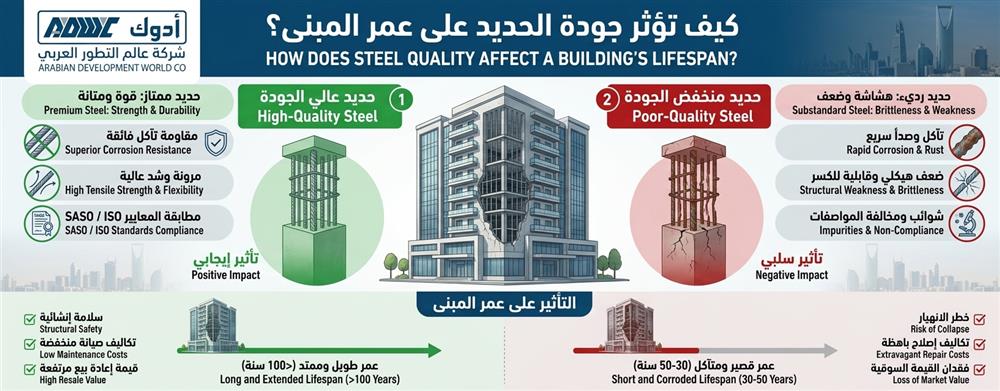
How Does Steel Quality Affect the Lifespan of a Building?
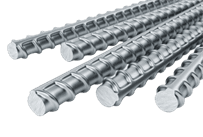
Steel quality is one of the important factors affecting the durability and service life of buildings, particularly reinforced concrete structures that rely on reinforcing steel to resist tensile forces and support structural loads.
Selecting reinforcing steel that complies with the required specifications and standards, together with proper storage, transportation, and installation, helps support the long-term performance and durability of a building.
Why Is Steel Quality Important in Construction?
Reinforcing steel works together with concrete to form reinforced concrete elements such as columns, beams, foundations, and slabs.
The performance of these elements depends on several factors, including the quality of construction materials, compliance with technical specifications, proper structural design, and correct execution.
Using high-quality steel that meets the required standards is therefore an important part of achieving the intended structural performance.
How Does Steel Quality Affect Building Lifespan?
1. Resistance to Loads and Forces
Buildings require reinforcing steel with the required mechanical properties to resist tensile forces and structural loads according to the design requirements.
Using steel that does not meet the required specifications may affect the structural performance of reinforced concrete elements. Therefore, the steel supplied for a project should comply with the applicable specifications and requirements.
2. Resistance to Rust and Corrosion
Rust and corrosion are among the factors that can affect reinforcing steel over time.
When significant corrosion occurs, the corrosion products can occupy more volume than the original steel, potentially creating internal pressure in the surrounding concrete. This may contribute to cracking or deterioration of the concrete cover.
Proper steel selection, storage, and protection from moisture can help reduce the risk of corrosion.
3. Maintaining the Integrity of Concrete Elements
Reinforcing steel quality is an important part of the overall construction system, but it is not the only factor affecting building durability.
The service life of a building is also influenced by concrete quality, mix design, structural design, concrete cover, workmanship, environmental conditions, and regular maintenance.
Steel quality should therefore be considered as part of an integrated construction quality system.
4. Reducing Long-Term Construction Problems
Using materials that comply with applicable specifications, combined with proper construction practices, can help reduce the likelihood of problems related to material quality.
Purchasing steel from a reliable supplier can also help ensure that the products have a clear source and meet the project's required specifications.
What Are the Characteristics of Good Reinforcing Steel?
When purchasing reinforcing steel, it is important to consider:
Compliance with applicable standards and specifications.
Availability of quality and test certificates when required.
The grade and type of steel.
Required diameters and quantities.
Visual inspection for damage or severe corrosion.
The source and reliability of the supplier.
Proper storage before use.
Is Steel Quality Alone Enough to Ensure a Long Building Lifespan?
No. Steel quality is important, but it cannot guarantee the service life of a building by itself.
Building durability depends on several interconnected factors, including structural design, concrete quality, construction materials, workmanship, environmental conditions, protection against moisture and other deterioration factors, and regular maintenance.
Steel quality should therefore be considered one of the key components of an overall structural quality system.
Why Choose a Reliable Steel Supplier?
Working with a reliable steel supplier can help contractors and project owners obtain products with a clear source and specifications suitable for the project.
It is also recommended to keep relevant product documents and certificates when applicable and to verify steel specifications, quantities, and diameters before delivery to the construction site.
Tips for Maintaining Steel Quality
To maintain the quality of reinforcing steel before use:
Store steel away from standing water.
Keep steel elevated above the ground.
Provide adequate ventilation.
Protect steel from moisture whenever possible.
Keep steel away from chemicals and contaminants.
Inspect steel before using it.
Follow the engineer's instructions and applicable project specifications.
Conclusion
Steel quality plays an important role in the performance and durability of reinforced concrete elements. Selecting reinforcing steel that complies with the required specifications is therefore an essential step toward constructing safe and durable structures.
However, the lifespan of a building does not depend on steel alone. Structural design, concrete quality, material quality, workmanship, storage, maintenance, and environmental conditions all contribute to long-term building performance.
Choosing reliable construction materials, following technical specifications, and implementing proper engineering practices can help achieve stronger, more durable, and more sustainable buildings.
.png)
- السجل التجاري : 1010298801
- الرقم الضريبي : 300438467100003