


Types of Steel Angles and Their Applications
Types of Steel Angles and Their Applications
Steel angles are among the most common commercial steel products used in construction, structural steelwork, industrial applications, and metal fabrication. They are available in different sizes and thicknesses for a wide range of uses.
The appropriate steel angle depends on the application, loads, dimensions, thickness, connection method, and project specifications.
What Are Steel Angles?
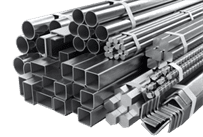
A steel angle is a structural steel section with an L-shaped cross-section, normally consisting of two perpendicular legs. Steel angles are widely used in structural frames, supports, brackets, and various metal structures.
Common Types of Steel Angles
| Angle Type | Common Term | Typical Applications |
|---|---|---|
| Equal Angle | Equal Leg Angle | Structures, supports, and metalwork |
| Unequal Angle | Unequal Leg Angle | Structures requiring different leg dimensions |
| Galvanized Angle | Galvanized Steel Angle | Applications requiring additional corrosion protection |
| Structural Angle | Structural Steel Angle | Structural frames and supports |
1. Equal Steel Angles
Equal angles have two legs of equal length and are among the most widely used steel angle sections in construction and metal fabrication.
They are commonly used in structural frames, supports, brackets, and various steel structures.
2. Unequal Steel Angles
Unequal angles have two legs with different lengths. They are used when the structural design requires different dimensions or specific section properties.
The required dimensions and thickness are selected according to the project design and applicable specifications.
3. Galvanized Steel Angles
Galvanized angles have a protective surface treatment designed to provide improved corrosion resistance in suitable environments.
They can be used in selected outdoor applications, structures, and projects where additional protection against environmental conditions is required.
4. Structural Steel Angles
Structural steel angles are used in applications where steel sections are required to form structural members, supports, or parts of steel frameworks.
The appropriate steel grade, dimensions, and thickness should be selected according to the project's specifications and structural calculations.
Steel Angle Sizes
Steel angles are available in many dimensions and thicknesses. Their size is generally described by the dimensions of the two legs and the material thickness.
- First leg dimension.
- Second leg dimension.
- Thickness.
- Required length.
- Section weight according to the applicable specification.
Applications of Steel Angles
- Steel structures.
- Steel supports and brackets.
- Metal shelving and frames.
- Door and structural frames.
- Warehouses and industrial buildings.
- Towers and lattice structures.
- Structural reinforcement and renovation.
- Industrial and metal fabrication.
How to Choose the Right Steel Angle?
- Intended application.
- Required loads.
- Angle length.
- Leg dimensions.
- Material thickness.
- Steel grade.
- Required corrosion protection.
- Applicable standards and codes.
For structural applications involving significant loads, the appropriate steel angle should be determined through engineering design and calculations.
Equal Angle vs. Unequal Angle
| Feature | Equal Angle | Unequal Angle |
|---|---|---|
| Leg dimensions | Equal | Different |
| Applications | General structural and metalwork applications | Applications requiring different leg dimensions |
| Section shape | Symmetrical | Non-symmetrical |
Steel Angles for Construction and Industrial Projects
Steel angles are widely used in construction and industrial projects for structural frames, supports, brackets, and other metal structures.
The product should be selected according to the required dimensions, thickness, grade, and project specifications.
Ordering Steel Angles
When ordering steel angles, provide the angle type, leg dimensions, thickness, length, quantity, specification, and project location whenever possible.
A quantity schedule or project details can also be provided to the supplier to prepare a quotation based on the actual requirements.
Request a Steel Angle Quotation via WhatsApp
If you need steel angles for your project, send us the required dimensions, thickness, quantity, and project location via WhatsApp to request an updated quotation.
Click here to request a steel angle quotation via WhatsApp
Frequently Asked Questions
What are the common types of steel angles?
The most common types include equal angles, unequal angles, galvanized angles, and structural steel angles.
What is the difference between equal and unequal angles?
Equal angles have two legs of equal length, while unequal angles have legs with different lengths.
Where are steel angles used?
Steel angles are used in structural frames, supports, brackets, warehouses, industrial structures, towers, and metal fabrication.
How do I choose the correct steel angle size?
The size and thickness should be selected according to the intended application, loads, structural design, and project specifications.
Can steel angles be used outdoors?
Some steel angles can be used outdoors when suitable corrosion protection is provided according to the environmental conditions and project requirements.
Conclusion
Steel angles are available in different types, sizes, and thicknesses. The most common types include equal and unequal angles, with each type serving different applications.
Arab Development World Company supplies commercial steel products and steel angles for contractors and project owners. Quotations are available according to the angle type, dimensions, thickness, quantity, and project location.
.png)
- السجل التجاري : 1010298801
- الرقم الضريبي : 300438467100003